
Beloslyudov Viktor Nikolaevich
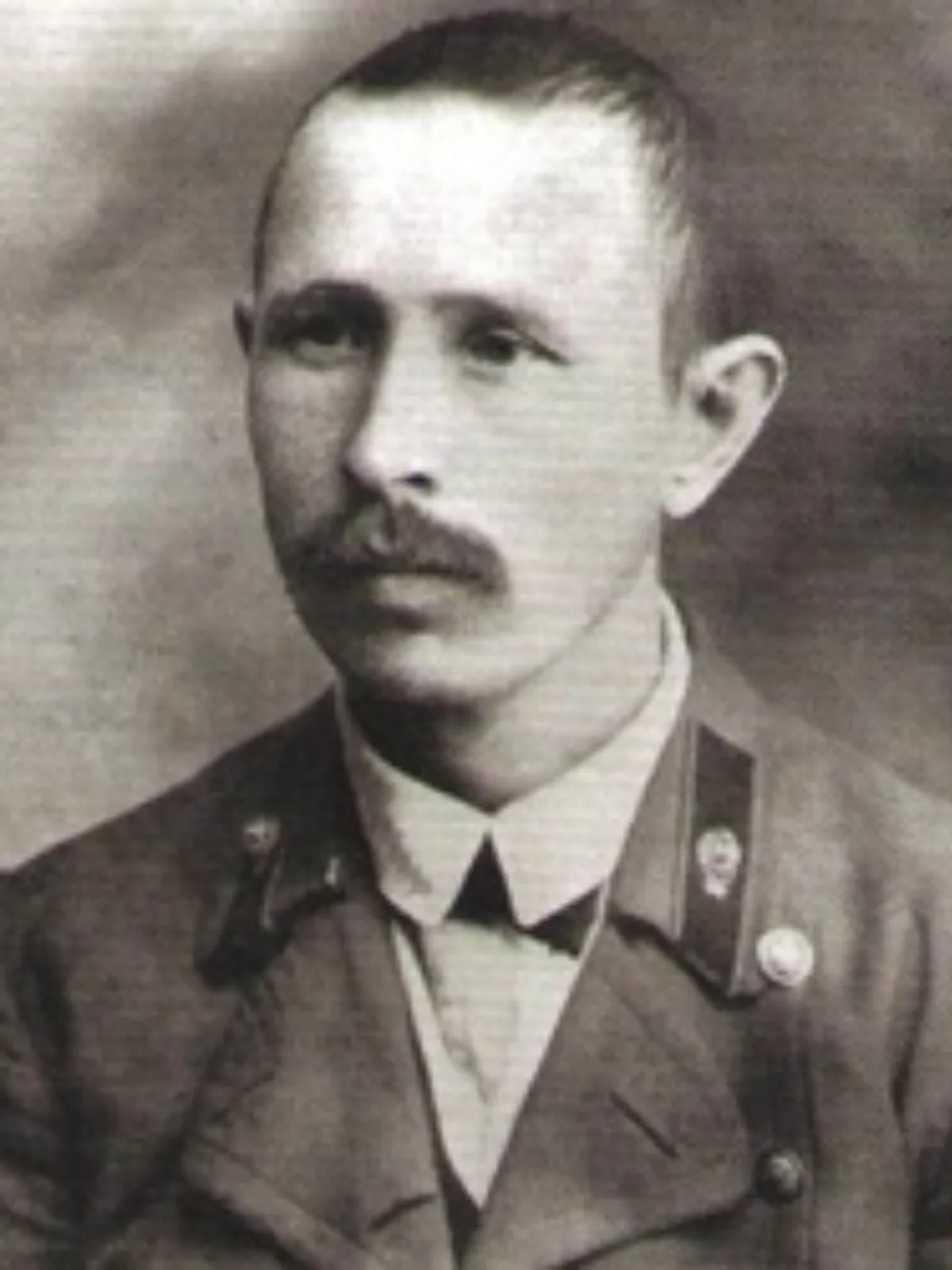
Beloslyudov Viktor Nikolaevich (13.02.1883-23.03.1916) – artist, local historian, ethnographer.
He was born in the city of Semey. At an early age, he lost his father, and his mother Varvara Vasilievna raised all four brothers. She dedicated her life entirely to her sons and made efforts to provide them with a quality education.
In the autumn of 1891, Viktor Beloslyudov was admitted to a five-class city school, where he studied very well. From a young age, he showed a special interest in drawing. He often spent hours with his album, drawing by the banks of the Irtysh River – in the reed-covered nooks and in the groves where willows and poplars grew. His unique style was noticed early on, and his childhood works were sent to the Paris exhibition, later also showcased at the All-Russian and Kazan vernissages. The teachers at the Semey men's gymnasium advised Viktor to enroll in an art school. After obtaining the family's consent, in 1899, Viktor Beloslyudov entered the Stroganov School of Art in Moscow.
After graduating from the Stroganov School in 1906, Viktor Beloslyudov returned to Semey and became a teacher at a primary school for children from ordinary families. He taught drawing, design, calligraphy, and graphics. Some of his students' works were exhibited at the first West Siberian exhibition held in Omsk. Viktor Nikolaevich traveled with his students to the Rudny Altai, trying to capture the majestic beauty of the Altai Mountains on his canvases.
V. N. Beloslyudov actively participated in the work of the Semey branch of the Russian Geographical Society and the regional historical and local history museum. In 1914, he wrote a brief historical essay about the city of Semey, and this manuscript is currently preserved in the manuscript collection of the Central Scientific Library of the National Academy of Sciences of the Republic of Kazakhstan.
He participated in exhibitions of Siberian artists held in Omsk, Irkutsk, and Tomsk, and his paintings attracted public attention.
He is the author of paintings titled "Semey," "Yurt," "Kazakh Girl," "Camel," "Kazaks Holding Kumys," "Peasant Mill," as well as sketches such as "Tomsk," "Old Semey," "Water Carrier," "At Tea," "Herd of Horses," "City Street," and many series of paintings dedicated to Kazakh fairy tales and folk epics.
He passed away on March 23, 1916, in Barnaul and was buried in Semey on March 28.