
Grebenshchikov Georgii Dmitrievich
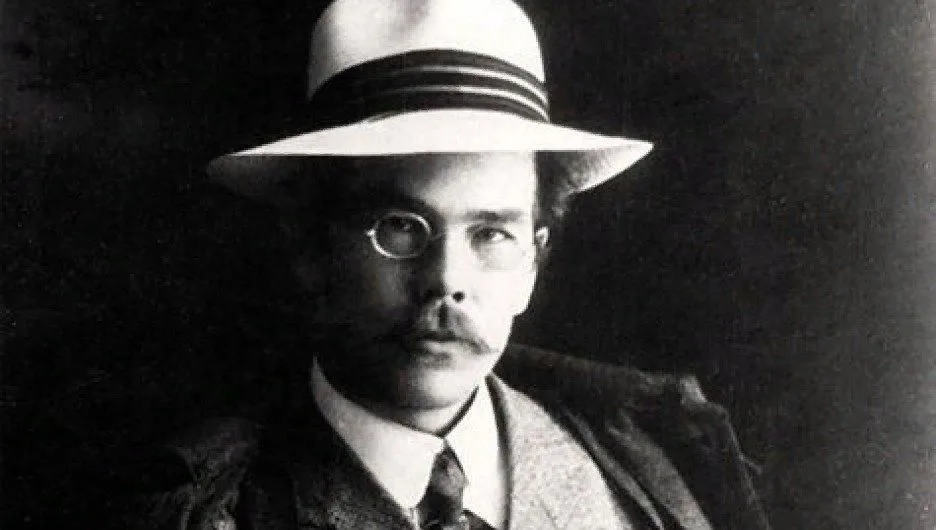
In 1898, his father took him to the forestry in Shemonaiha and made him an assistant to the forester. Here, he read Ivan Turgenev's "Hunter's Notes" for the first time, and from that moment on, he began to see the surrounding nature differently. Later, the future writer became a peaceful judge's writer and a notary's writer in Semey city, where in 1903 he gained certain knowledge in literature and history, mastered literary skills, and achieved independence. Grebenshchikov's first literary works began to appear in 1904-1905. His first works, including stories, essays, and poems, were published under the pseudonym "Krestyanin G." in the newspaper "Semey Parakh." In April 1906, the writer's first book titled "Echoes of the Siberian Edges" was published. The Kazakh Soviet Encyclopedia mentions that Georgy Grebenshchikov translated the works of Abai, but it is unknown which ones. In 1907-1908, with the efforts of the "Society of Music and Dramatic Arts Lovers" in Semey city, Grebenshchikov's play "Dzhaksy Zhigit" and N. Annenkova-Bernard's play "Beket" were staged as the first dramatic works. In Semey, which has long been a center of art and culture, as well as a national political movement, a literary-ethnographic and musical evening was organized to commemorate the tenth anniversary of Abai's death, where Nazipa Kulzhanova read the poet's verses in Russian. In the autumn of 1909, prominent public figure Grigory Potanin invited Georgy Dmitrievich to become the responsible secretary of the magazine "Young Siberia," which was published under his leadership in Tomsk. An important event in G.D. Grebenshchikov's life in 1910-1911 was his membership in the Russian Geographical Society, established to study the ethnography and lifestyle of the local population and to travel to Altai, as noted by East Kazakhstan local historian V. Chernykh in one of his articles (all strongly written: our famous places. "Rudny Altai," December 9, 1971). In 1910-1911, following Potanin's advice, he made an ethnographic trip to Altai. Based on their findings, he made reports about the old believers in the Tomsk Siberian Research Society, lectured on the settlers of Bukhtarma at the Siberian Assembly in St. Petersburg, and published essays in the "Altai Collection." In the spring of 1912, at Potanin's suggestion, he became the editor of the Barnaul newspaper "Altai Life." During this time, he published a two-volume collection of stories and tales titled "In the Space of Siberia." With the help of M. Gorky, with whom he was in correspondence, he began to publish in the capital's magazines "Sovremennik" and "Letopis," and prepared the "Altai Almanac" (St. Petersburg, 1914) with the funding of Barnaul patron V. M. Vershinin, where works by V. Shishkov, S. Isakov, and other young writers were published. Between 1913 and 1916, the novellas "Batyrbek Khan" and "Lyubava" were published. In 1917, he completed the first part of his main work—the novel "Churaevs," in which the religious and moral issues that troubled the writer were reflected. In 1920, he emigrated. He initially lived in France, where he met N. Roerich, F. Chaliapin, and K. Balmont in Paris. In 1923, he established the "Alatas" publishing house with N. K. Roerich. Among the books published by "Alatas" are N. K. Roerich's "Light Power," A. Remizov's "Nikolina Sayings," K. D. Balmont's "Blue Hoof," and prof. I. A. Sikorsky's "Book of Life," "The Invisible Guest" by Iv. Umova. From 1924, he settled in the USA, where he received the title of professor of Russian history and literature and taught at South Florida College. In 1925, the village of "Churaevka" was established in Connecticut.