
Khalidi Kurbangali
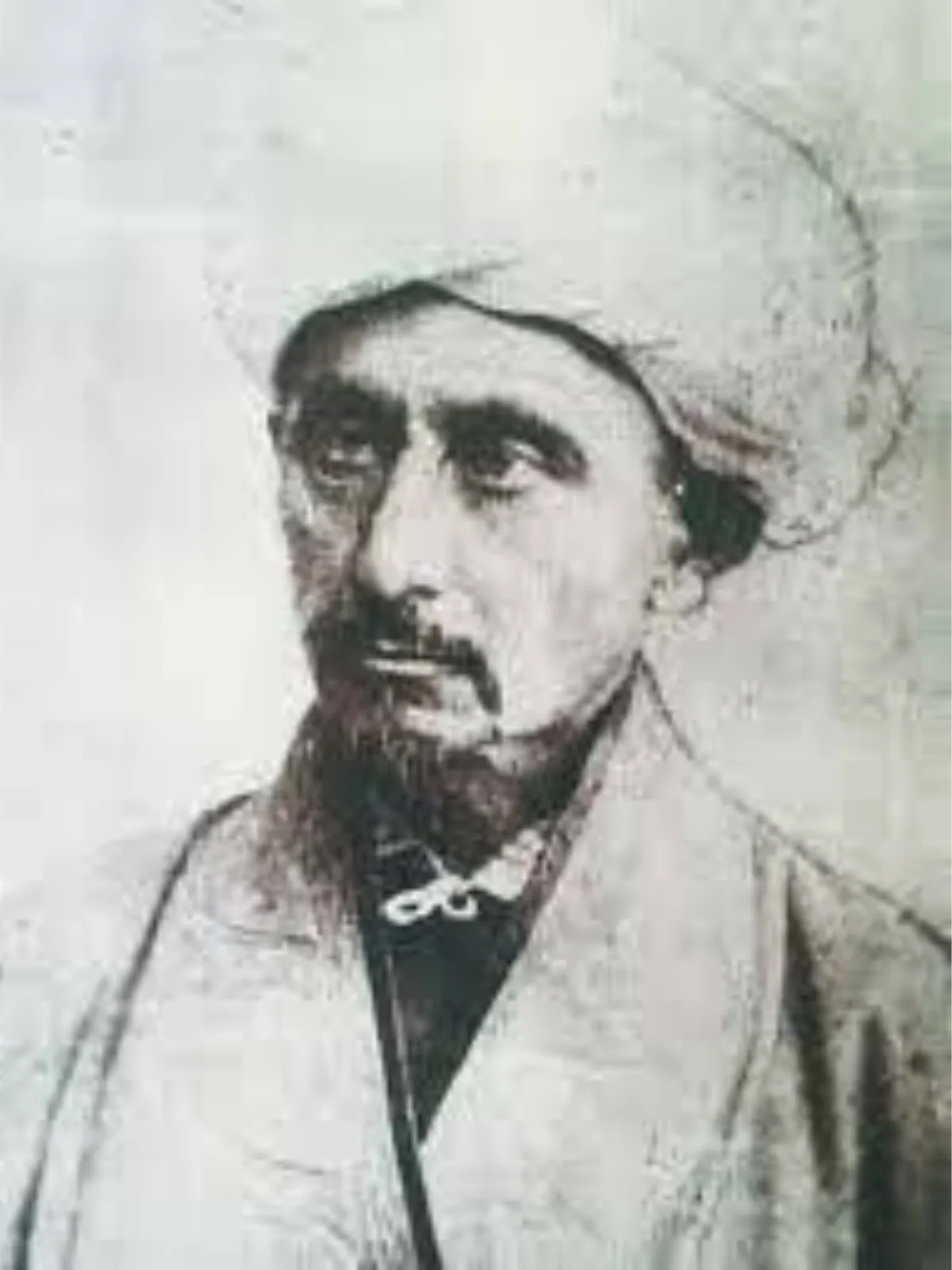
Khalidi Qurbanqali (30.11.1846-14.03.1913) – a historian, researcher of the history, customs, oral literature, and culture of the Kazakh people. He was born in November 1846 in the city of Ayagoz. His father, a Tatar merchant named Khalid, was originally from the village of Urnash Bashi in the Kazan district. From a young age, Khalid engaged in trade with the Kazakhs and moved to Ayagoz in 1841, where he lived for 30 years. Khalid Baba registered with the Ayagoz (Sergiopol) divan and got married there. Qurbanqali Mirsahib was born in Ayagoz from that marriage. In 1850, Qurbanqali Khalidi studied at the Ayagoz madrasah, built by the merchant Murtaza Maksutov from Petropavlovsk, under a teacher named Muhammad Sadik Ismailov, and later completed his education at the madrasah of Abdi-Jappar Gubaydullayev in the city of Semey. There, he mastered the Arabic, Persian, and Turkish languages, which helped him gain extensive knowledge of Eastern history. Despite the religious education provided at the madrasah, Qurbanqali Khalidi also excelled in secular sciences due to his intelligence. After graduating from the madrasah, he returned to his hometown of Ayagoz to teach children. In 1874, he moved to the city of Shaueshik for work and became an imam at a mosque. He opened a madrasah and provided education to Muslim youth in Arabic, Persian, and Tatar languages. He served as an imam until the end of his life, that is, until March 14, 1913. Although Qurbanqali Khalidi lived in the city of Shaueshik, he traveled to Ayagoz, Semey, Omsk, Orenburg, Ufa, and Kazan for trade, travel, and religious purposes, meeting with scholars, poets, writers, and publishing workers. He established connections with intellectuals and was constantly engaged in scientific research. Qurbanqali Khalidi traveled around the villages and towns of Kazakhstan and Eastern Turkestan, collecting historical and ethnographic data and materials. He wrote his work "Tarikh-i jarida-i jadida" during his travels to Eastern Turkestan in 1886-1887, using information from people he met and relying on the works written by scholars. Therefore, this work can be considered both a travelogue and a scientific research paper. In this work, the author provides information about the ethnic composition, geographical names, cultural conditions, and mosques of cities such as Manas, Sanchy, Urumqi, Dawan, Turpan, and Astana in Eastern Turkestan, as well as writing about famous people who lived in those cities and their lives. Additionally, he provides information about the epic "Ashabu-l-Kahf (The Cave Dwellers)" mentioned during his time in the city of Turpan in Eastern Turkestan and the conversion of the Dungans living in those regions to Islam. A copy of Qurbanqali Khalidi's work "Tarikh-i jarida-i jadida" was published by Akhmet Vali Kazani in 2001 in Berlin under the title "Semey Tarikhy. Facsimile and Translation." In 2013, a transcription of this work in Latin letters titled "KITAB-I TARIH-I GERIDE-I GEDID. KARI KURBAN ALI HALIDI" was published in Ankara (Turkey) with the preparation of Bahattin Genchal. He also wrote the work "Tawarikh-i hamsa-i sharqi," which includes information from Kazakh oral literature. Qurbanqali Khalidi passed away on March 14, 1913, in the city of Shaueshik.