
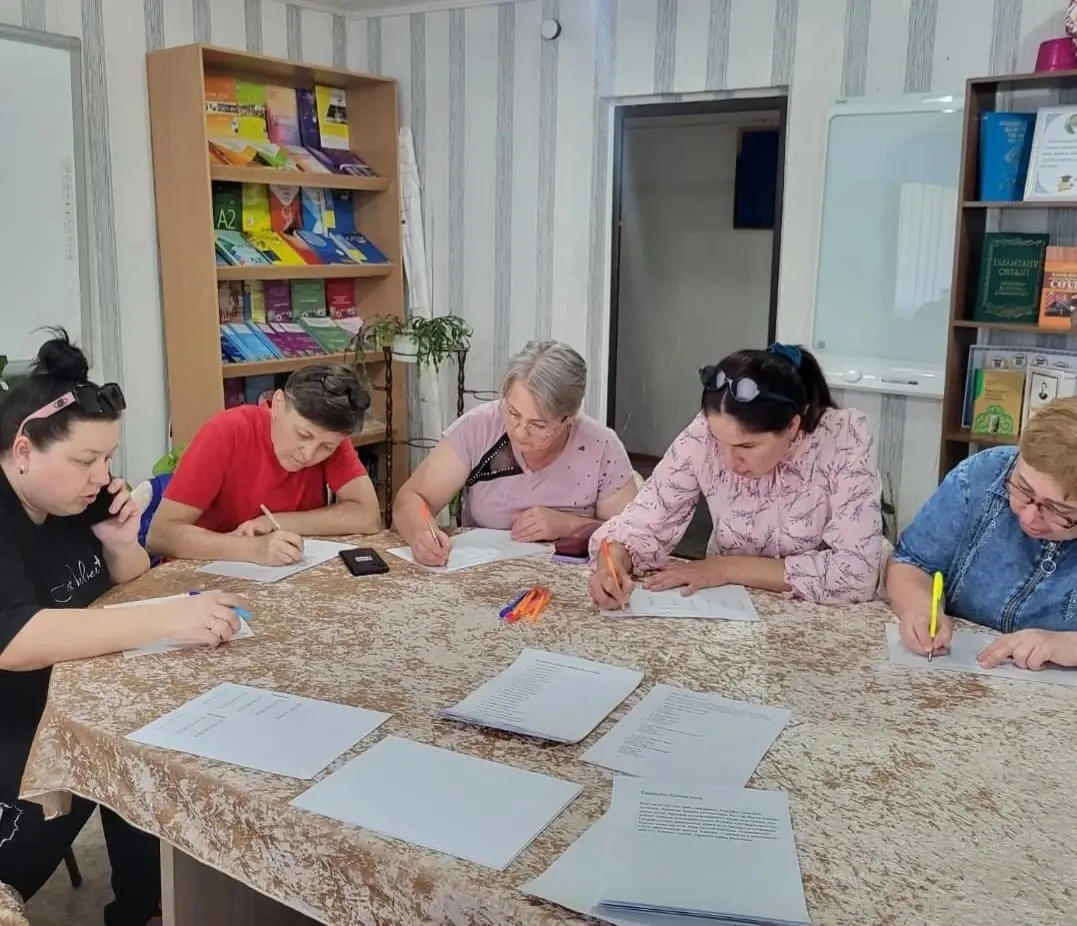

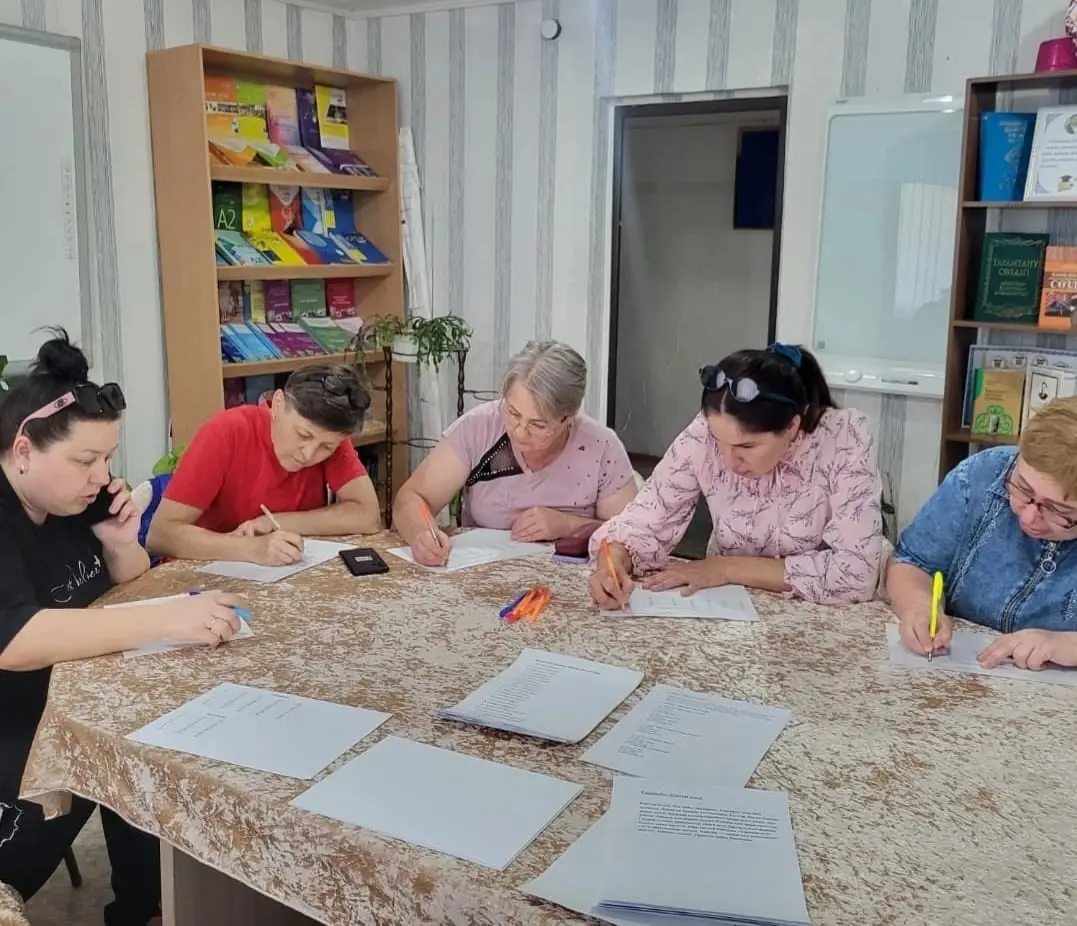
"The Language Teaching Center of the Beskaragay District of Abai Region" is a municipal state institution.
1. "The Language Teaching Center of the Beskaragay District of Abai Region" (hereinafter referred to as the state institution) is a non-profit organization established in the form of an organizational and legal entity to carry out its activities and has the status of a legal entity.
2. The type of the state institution: municipal.
3. The state institution was established by the resolution No. 134 of the Beskaragay District Akimat dated April 15, 2008.
4. The founder of the state institution is the Akimat of Beskaragay District.
5. The relevant authorized body of the sector, as well as the authorized state body that exercises the functions of a legal entity regarding the property of the related municipal state institution, is the "Department of Internal Policy, Culture, Language Development, and Sports of the Beskaragay District of Abai Region."
6. The name of the state institution: "The Language Teaching Center of the Beskaragay District of Abai Region."
7. The location of the state institution: 070300, Republic of Kazakhstan, Abai Region, Beskaragay District, Beskaragay Village, Seyfullin Street, 153.
Legal Status of the State Institution
8. The state institution shall have an independent balance sheet, bank accounts, and forms bearing the State Emblem of the Republic of Kazakhstan and the name of the state institution in accordance with the legislation of the Republic of Kazakhstan.
9. Except for cases provided for by the laws of the Republic of Kazakhstan, the state institution cannot create another legal entity, nor can it be a founder (participant) of another legal entity.
10. The state institution is liable for its obligations with the funds at its disposal. When the funds of the state institution are insufficient, the Republic of Kazakhstan or the administrative-territorial unit shall bear subsidiary liability for its obligations with the relevant budget funds.
11. The civil law transactions of state institutions shall come into force after they are registered with the territorial treasury departments of the Ministry of Finance of the Republic of Kazakhstan.
Essence and Objectives of the State Institution's Activities
12. The essence of the state institution's activities is to carry out educational services in the field of education that are not included in other categories.
13. The objective of the state institution's activities is to create the necessary organizational and material-technical conditions for the implementation of the Law of the Republic of Kazakhstan on Language.
14. To achieve its objectives, the state institution carries out the following types of activities:
1) Teaching the state and other languages (Kazakh, Russian, English, and others) to public servants of state institutions, organizations, and enterprises of all forms of ownership, as well as other groups of the population;
2) Providing the necessary material-technical conditions and educational-methodological tools for organizing training;
3) Conducting informational blogs on social networks to achieve widespread use of the state language among the residents of the district and to enhance the prestigious image of the state language speaker;
4) Publishing materials on the implementation of language policy in the Beskaragay district newspaper and local magazines;
5) Supplementing the website of the district akimat with multilingual informational content within the framework of implementing the idea of developing inclusive education in the Republic of Kazakhstan;
6) Interacting with state and non-state organizations, institutions, and enterprises on issues of achieving widespread use of the state language and expanding its application;
7) Providing methodological and practical assistance to state bodies, departments, and collectives, enterprises and organizations of any form of ownership, as well as individuals in the design of documents and visual information in accordance with the Law of the Republic of Kazakhstan on Language;
8) Providing consultative assistance to state language editors working in district institutions and organizations on updating the terminological base, relevance of various lexical structures, etc.;
9) Organizing and conducting scientific-practical seminars, courses, webinars, and online conferences on teaching methodology for adult education to enhance the qualifications of teachers;
10) Developing and disseminating methodological recommendations and tools, including for a trilingual education model that takes into account the needs of modern society;
11) Cooperating with similar state institutions and organizations in the Republic of Kazakhstan;
12) Organizing cultural and mass events on the issues of implementing language policy with extensive informational support (debate competitions, quizzes, etc.);
13) Having the right to provide paid services for teaching the state language that are not prohibited by this regulation and legal acts.
15. The state institution has no right to engage in activities that do not correspond to the essence and objectives of its activities established in this Charter, as well as to make transactions.
16. Any transaction made by the state institution that contradicts the purposes of activities restricted by the laws of the Republic of Kazakhstan or the founding documents, or violates the statutory authority of its head may be declared invalid at the request of the relevant authorized body of the sector, local executive body, or prosecutor.
Activities:
• Use of modern technologies: The introduction of QR codes, digital and interactive presentations provides learners with quick and accessible opportunities to obtain educational materials and information.
• Working with mass media: Articles about the center's activities, the promotion of the state language, and events aimed at language development are regularly published in local publications.
• Educational events: Open lessons, master classes, language competitions, and interactive quest games are organized annually, serving as an effective way to widely promote the activities of the language teaching center.
• Optimizing the learning process: A convenient learning navigator for language teaching programs has been developed and implemented. This facilitates access to educational materials, accelerates learners' independent search, and aims to enhance the effectiveness of working with language knowledge.
Staff Composition
The staff of the Beskaragay Language Teaching Center consists of 8 employees, including the center director, accountant, methodologist, and 5 teachers engaged in teaching the state language. The center's team is composed of qualified specialists with extensive experience in language teaching and implementing language policy.
The center's teachers use modern methodologies, interactive approaches, and a level-based teaching system in teaching the state language as well as other languages. Visual aids, digital resources, and test and practical tasks are widely used during lessons. This enhances learners' interest and contributes to improving the quality of education.
To enhance the professional qualifications of the staff, the center's specialists regularly participate in seminars and courses organized at the regional and republican levels. Open lessons, master classes, and experience exchange meetings are held for methodological support. The work of the center's employees has been recognized, and they have received letters of thanks and awards from authorized bodies at the republican and regional levels for their contributions to language development.
This demonstrates the effectiveness of the team's work. The Beskaragay Language Teaching Center carries out its activities based on annual work plans developed in accordance with the state programs in the field of language policy of the Republic of Kazakhstan, as well as the recommendations of the regional department of culture and language development. Today's language teaching center is an important spiritual platform aimed at the future of the nation.
Expanding the public use of the state language, forming the linguistic culture of the population, and developing a multilingual environment are among the main tasks of the center.